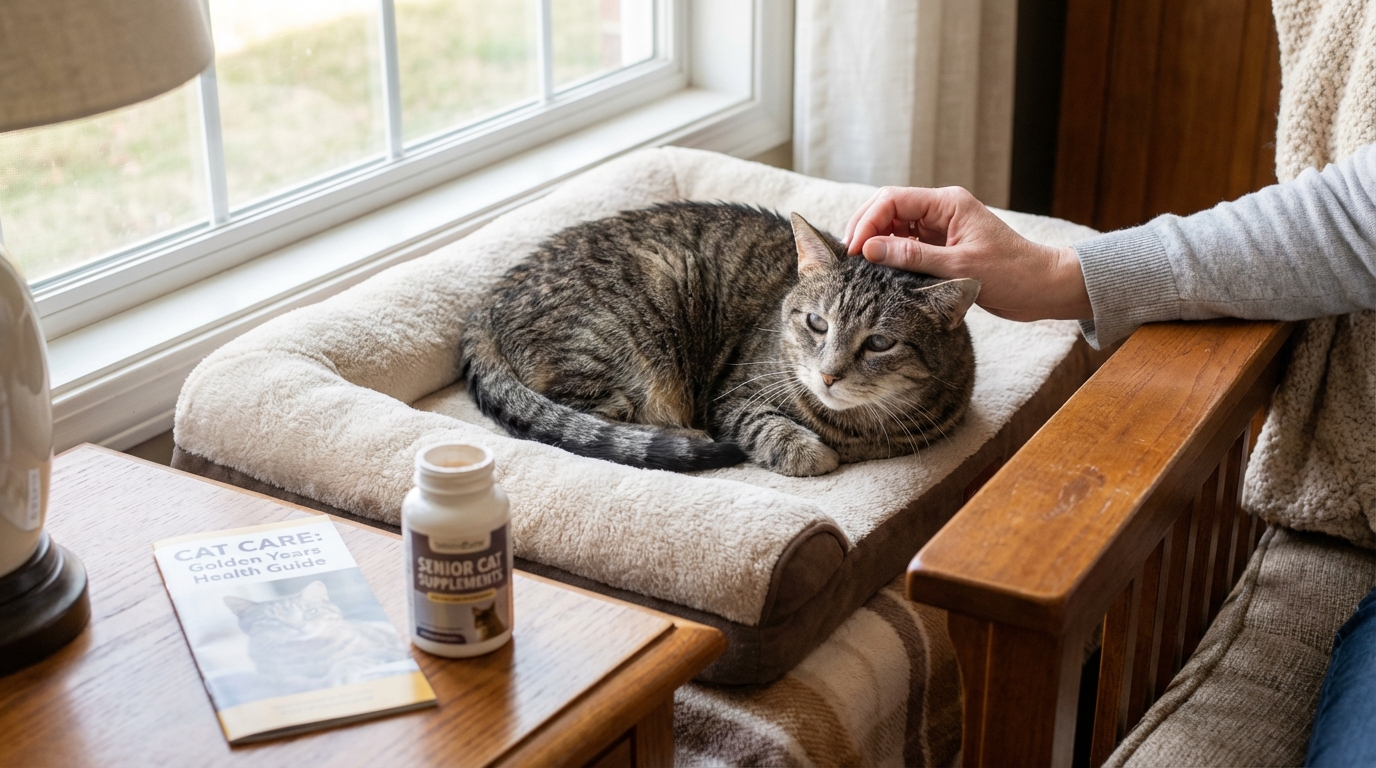
Is Your Cat Secretly Stressed? How to Create a Truly Calmer Home
Your cat is a master of the poker face. In the wild, showing weakness or fear is a death sentence, so your feline friend has evolved to hide their discomfort...

Oliver Chen
Cat Rescue Advocate
Is Your Cat Secretly Stressed? How to Create a Truly Calmer Home
Your cat is a master of the poker face. In the wild, showing weakness or fear is a death sentence, so your feline friend has evolved to hide their discomfort behind a mask of cool
Reading Between the Purrs: Spotting the Subtle Signs of Cat Stress
Have you ever looked at your cat and wondered why they suddenly seem like a completely different animal? One minute they are lounging in a sunbeam and the next they are swatting at your ankles or hissing at the air. We often label this as "moodiness" or just "cats being cats." But here is the truth. Most of the time, what we call a bad attitude is actually a quiet, desperate plea for help.
Cats are masters of disguise. In the wild, showing weakness or pain makes you a target, so they have evolved to hide their discomfort until it becomes unbearable. When your cat acts out, they aren't trying to be difficult. They are likely experiencing a surge of cortisol. Chronic stress does more than just make a cat grumpy. It actively suppresses their immune system. This makes them vulnerable to infections and inflammatory issues that a happy cat would easily fight off.
It is important to distinguish between normal feline caution and clinical anxiety. A cat that runs away when the vacuum starts is just being sensible. However, a cat that stays hidden for hours after the vacuum is put away is struggling. If your cat treats every minor change like a life-threatening event, you are looking at a deeper issue. Understanding these signs of cat stress is the first step toward fixing the environment rather than blaming the pet.
Key insights:
- Moodiness is a biological red flag. It is rarely a personality trait and almost always a reaction to an external pressure you might not even notice.
- Stress is a physical burden. High levels of stress hormones can lead to real physical illnesses like cystitis or skin infections.
- Context is everything. You have to look at the duration of the behavior, not just the behavior itself, to know if it is an emergency.
Body Language 101: Beyond the Hiss
Most people think a hissing cat is the only sign of trouble. That is actually the final warning. Long before the hiss, your cat is speaking to you with their entire body. Watch the tail. A happy cat has a high, confident tail. A stressed cat might have a low, twitchy tail that thumps rhythmically against the floor. It is not a wag. It is a sign of mounting frustration.
Then there are the ears. If they are rotated outward like airplane wings, your cat is scanning for danger. You might even see their skin "ripple" or twitch along their back. This is often a sign of over-stimulation or extreme tension. Sometimes, a cat will even lash out at you when they are actually upset about something else entirely, like a stray cat they saw through the window. This is called redirected aggression. It is a pure fear response, not a lack of love for you.
Key insights:
- The tail is a barometer. Rapid twitching at the very
If your cat is hissing, you missed the warnings. Cats are masters of the "slow burn," using subtle shifts in their physical posture to signal that their internal pressure cooker is reaching a boiling point. Look at the ears. When
The Silent Protest: Changes in Routine
Your cat isn't trying to punish you. When we find a mess on the rug, it’s easy to assume it’s a calculated act of spite because we stayed at work late or forgot to buy the expensive treats. But cats don't do revenge. Instead, missing the litter box is one of the most significant signs of cat stress because it usually means the cat feels vulnerable or physically uncomfortable. Think of it as a desperate attempt to surround themselves with their own scent to feel safe in an environment that suddenly feels unpredictable.
Watch the food bowl and the clock too. If your normally ravenous tabby is suddenly picking at their kibble or sleeping in the laundry room instead of on your lap, they are telling a story. This social withdrawal often gets dismissed as "just being a cat," but moving from the center of the room to deep hiding spots for cats under the bed is a red flag. They are trying to make themselves small because the world feels too big.
Key insights:
- Bathroom accidents are often about scent-marking for security rather than bathroom habits. It is a plea for a more stable environment.
- Changes in sleep patterns can mask separation anxiety in felines that manifests when your schedule shifts unexpectedly.
- A cat that stops grooming or playing isn't getting "lazy" but is likely diverting all their energy into staying alert and guarded.
This shift in behavior is usually the first line of communication before things escalate. But what happens when the stress isn't about a dirty litter box and is actually about the physical space around them?
The Science of Scent: Why Pheromone Sprays Are a Game Changer
Ever wonder why your cat rubs their chin on the sharp corner of your coffee table until they look like they are in a trance? They aren't just itchy. They are actually depositing specific chemicals called F3 facial pheromones. Think of these as tiny, invisible "Post-it" notes that tell the cat, "This place is safe. You can relax here." When a cat is stressed, they stop leaving these notes. That is where synthetic pheromone sprays step in to save the day.
These sprays mimic those natural markers perfectly. It is essentially a chemical "all-clear" signal. While a plug-in diffuser acts like calming background music for the whole house, a spray is more like a targeted deep-breath exercise. It is designed for specific moments of high tension. If your cat has a favorite hiding spot because they are scared of the new puppy, or if they have started marking a specific wall, the spray provides immediate, localized reassurance.
But we have to be realistic here. Pheromones are a powerful tool, but they aren't a magic "off" switch for bad behavior. If your cat is urinating outside the box because of a painful bladder infection, no amount of spray will fix that. It is a support system. It lowers the "background noise" of their anxiety so they can actually learn that the scary thing isn't so scary after all. You are essentially turning down the volume on their fear.
Key insights:
- Pheromones provide a "biological shortcut" to safety. They bypass the logical brain and speak directly to the emotional center of the cat.
- Sprays offer tactical relief that diffusers can't match. You can't take a wall outlet into a vet's office, but you can certainly take a sprayed towel.
- Manage your expectations by viewing scent as one layer of a larger plan. It works best when combined with environmental changes and positive reinforcement.
Strategic Application for Maximum Effect
How you use the spray matters just as much as what is inside the bottle. If you are dealing with a multi-cat household where the fur is flying, you need to target the "conflict zones." These are the narrow hallways or doorways where one cat might trap another. By spraying these areas, you change the emotional context of the space. Instead of a battleground, it becomes a neutral zone.
The biggest mistake people make happens right before a car trip. You might be tempted to spray the carrier and immediately shove your cat inside. Don't do that. These sprays are often alcohol-based. If you put your cat in right away, the sharp scent of the alcohol will overwhelm their sensitive nose and actually make the stress worse. You need to spray the carrier or the bedding at least 15 minutes before the cat goes near it. This gives the alcohol time to evaporate, leaving only the soothing pheromones behind.
Also, never spray the cat directly. It seems obvious, but people try it. Cats hate being squirted with liquid, and doing so will create a negative association with the very scent that is supposed to calm them. Focus on the objects they interact with instead. Spray their favorite blanket, the corners of the sofa, or even your own pant legs if they seem wary of you.
Key insights:
- Timing is everything for travel. That 15-minute wait is the difference between a calm car ride and a feline meltdown.
- Target the "invisible borders" in your home. Spraying doorway frames can reduce tension in homes where cats are competing for territory.
- Less is often more. You don't need to soak the house. A few strategic spritzes in high-traffic areas are usually enough to shift the mood.
Now that the air smells a bit more like "home," we should look at the physical environment. Sometimes, the best way to lower stress isn't just what a cat smells, but where they can hide.
Imagine you are trying to coax a suspicious, vibrating cat into a plastic carrier. It usually feels like wrestling a caffeinated octopus. If you are moving with a cat, timing is your best friend. Most people grab the cat pheromone spray and spritz the carrier right before the "shove and shut" maneuver. That is a huge mistake. The spray has an alcohol base that needs to evaporate. If you don't wait at least 15 minutes, the scent is sharp and off-putting. You want the calming signals to settle so the carrier feels like a sanctuary, not a chemical trap.
In homes with multiple felines, the tension often lives in the "choke points." Think about that narrow hallway or the top of the stairs where they stare each other down. These are conflict zones. If you notice signs of cat stress like blocking or heavy tail flicking, that is where you apply the spray. You are basically posting "peace treaty" signs in the areas where they feel most cornered. Just remember to never spray the cat directly. It sounds obvious, but in a moment of panic, owners do it. It scares them and completely defeats the purpose.
Key insights:
- Wait for the alcohol to dissipate so your cat only smells the soothing message.
- Target the doorways and hallways where cats tend to guard territory or feel trapped.
- Avoid spraying scratching posts because the calming pheromone might actually discourage them from using the post for its intended purpose.
Understanding these small nuances is what actually turns a house into a home where your cat feels safe enough to finally stop hiding.
The Architecture of Comfort: Why Hiding Spots for Cats Matter
Ever wonder why your cat suddenly vanishes the moment the doorbell rings? It is not just a personality quirk. For a cat, a house without a hiding spot feels like an open field with a hawk circling overhead. They need to feel "unfindable" to feel safe. This is what behaviorists call seeking a defensible space. In the wild, being seen means being dinner. Even though your living room is predator-free, your cat’s DNA hasn’t gotten the memo yet.
When we talk about hiding spots for cats, we are not just talking about a cardboard box in the corner. We are talking about an ecosystem of security. In homes with multiple pets, this becomes even more vital. If your cat feels trapped on the floor, their stress levels skyrocket. This is where vertical territory comes in. A high shelf or a tall cat tree is not just furniture. It is a strategic vantage point that lets them monitor the "threats" like a hyper puppy without actually being in the line of fire.
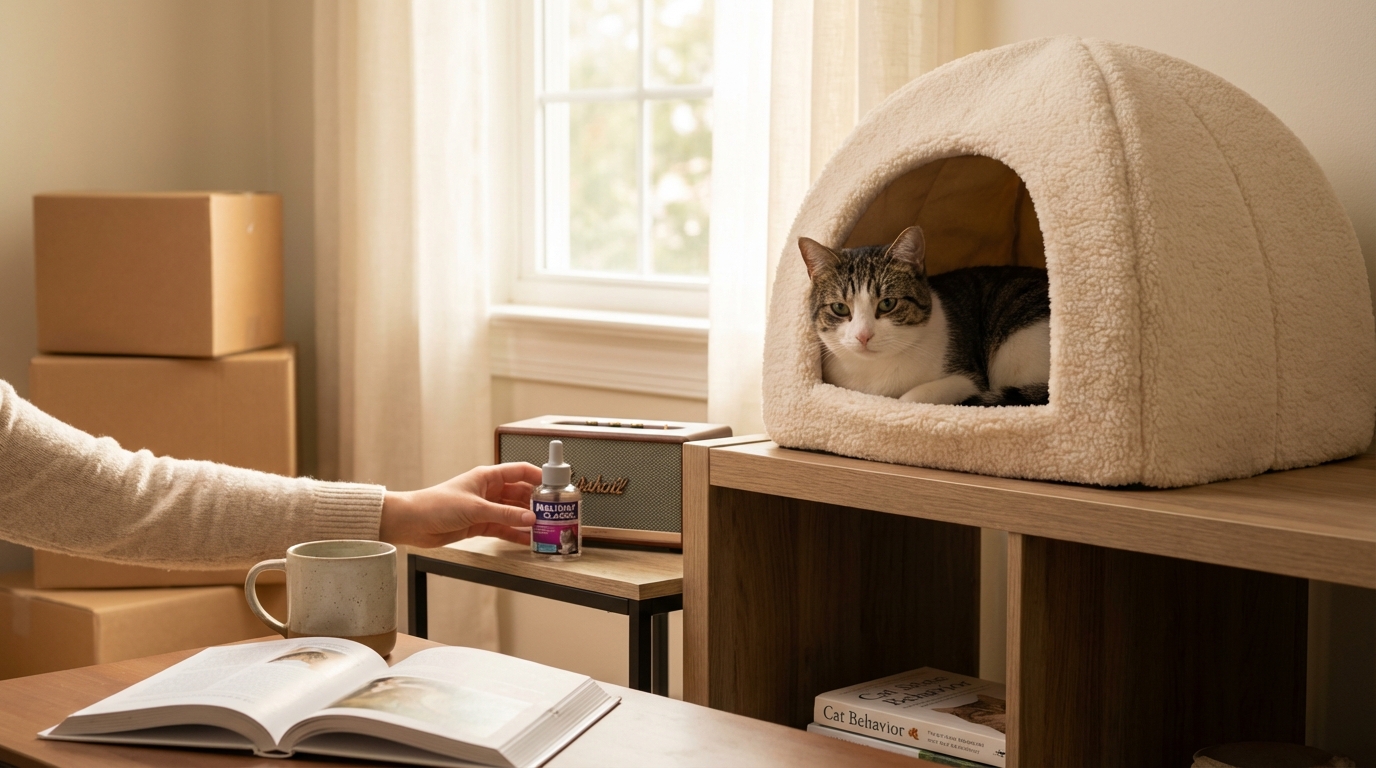
Creating a safe room is a game changer, especially when moving with a cat. But here is the trick: the room needs to be a place they actually want to be, not a prison. Start by spritzing some cat pheromone spray on a soft blanket. It mimics the natural facial scents cats use to mark territory as safe. You might also try playing some soothing music for cats to mask the scary sounds of moving boxes or street traffic. Suddenly, that spare bedroom is not just a room. It is a sanctuary.
Key insights:
- **Hiding is
High vs. Low: Choosing the Right Escape Route
Ever watched your cat do a disappearing act the second a guest walks in? It is a classic move. But where they go tells you a lot about how they handle pressure. For most felines, height is the ultimate security blanket. When a cat is perched on top of a tall bookshelf or a kitchen cabinet, they are not just being aloof. They are gathering data. From up there, they can see exactly where the "danger" is without being touched. It turns a scary room into a map they can control.
But not every cat wants to be a mountaineer. Some prefer the floor. The issue is that many common hiding spots for cats, like the dark void under a bed, can feel like a trap if there is only one way out. If your cat feels cornered, their heart rate stays high. You can solve this by creating escape-ready retreats. Think of a box with two holes or a chair with a long, draped cover. It provides shade without the claustrophobia.
Also, keep an eye out for resource guarding. If you see one cat blocking the entrance to a favorite cubby, that is one of those subtle signs of cat stress you should not ignore. By scattering small micro-hides throughout your home, you take the pressure off. When every room has a quick exit, nobody feels the need to fight for the throne.
Key insights:
- Verticality is a psychological shield. Being above the action allows a cat to transition from "prey mode" to "observer mode" almost instantly.
The Sound of Serenity: Is Your Playlist Stressing Your Cat Out?
Have you ever noticed your cat bolting from the room the moment a heavy bass line kicks in? It isn't just a critique of your musical taste. Your cat hears a world that is completely invisible to you. While we enjoy the thumping rhythm of a pop song, those low-frequency vibrations can feel physically jarring to a creature whose ears are designed to catch the high-pitched squeak of a mouse from thirty feet away. We often treat our homes like a constant concert venue. Between the roar of the vacuum, the blare of the TV, and our own favorite playlists, we are inadvertently creating a sonic minefield for our pets.
The reality is that human music is often just noise to a feline. But researchers found a clever workaround. They started developing "species-specific" music. This isn't just soft piano music. It is audio composed using the frequencies and tempos that cats naturally find comforting, like the rhythmic beat of a mother cat’s heart or the high-pitched trills of birds. In shelter environments, where the air is usually thick with the sound of barking dogs and clanging metal, this music works wonders. It lowers heart rates and encourages cats to step out of their hiding spots for cats to explore.
You can use this same science to protect your cat from the outside world. If you live in a noisy city or you are currently moving with a cat, the world feels loud and unpredictable. Using auditory cues as a "sound blanket" can mask those scary outside bangs. It creates a predictable, controlled environment that tells your cat they are safe.
Key insights:
- Frequencies matter more than volume. Cats hear much higher pitches than humans, so what sounds like "background noise" to us might sound like a piercing whistle to them.
- Music is a biological tool. Species-
Curating a Feline-Friendly Soundscape
Have you ever noticed your cat’s ears swivel toward the speakers when you are playing your favorite playlist? It is probably not because they share your love for classic rock. In fact, most human music is actually quite jarring to them
Life Transitions: Moving With a Cat Without the Meltdown
Imagine your entire world is being dismantled and stuffed into brown cardboard boxes. To a cat, a move isn't just a change of scenery. It's a total collapse of their territorial sovereignty. We often think they’re upset because they hate the car ride, but the real issue starts weeks before the moving truck arrives. When the familiar smells of your home begin to vanish, many pets start showing clear signs of cat stress like over-grooming or uncharacteristic hiding.
The secret to a smooth move is the "First In, Last Out" rule. Most people make the mistake of letting the cat wander while the movers are hauling out the heavy stuff. This is a recipe for a panic attack. Instead, keep your cat in a cleared-out bedroom with the door shut until the very last second. Provide them with a sanctuary space filled with their familiar things and perhaps some soothing music for cats to mask the terrifying sounds of furniture scraping across the floor. They should be the last thing you load into your car and the first thing you set up in the new place.
Scent is the language of safety for felines. When you reach the new house, it smells like "nothing" or, worse, like the previous owner's pets. This can trigger a sudden bout of separation anxiety in felines because they no longer recognize their environment. To fix this, don't wash their bedding right before the move. You want that old, comforting scent to be the first thing they encounter. Using a cat pheromone spray on the corners of the walls and in their carrier can also bridge the gap between "scary new place" and "home."
Once you arrive, resist the urge to let them explore the whole house at once. It’s too much. Start them in a "base camp" room. Set up their litter box, food, and plenty of safe hiding spots for cats so they feel they have a retreat.
Key insights:
- Territory is psychological, not just physical. If the scent map of the home is destroyed by cleaning and packing, the cat loses their sense of self.
- Moving with a cat requires you to be a "scent architect" by strategically placing unwashed blankets and pheromones to create a familiar atmosphere in a foreign space.
- The "slow reveal" of a new floor plan prevents the cat from feeling overwhelmed and helps them claim the new territory one room at a time.
This transition period is delicate, but if you prioritize their nose over your interior design, they will
When You Leave: Managing Separation Anxiety in Felines
We’ve all heard the tired joke that cats are just tiny, furry roommates who barely tolerate our existence. We imagine them throwing a party the second we lock the front door. But have you ever noticed your cat pacing the hallway the moment you grab your jacket? That isn't indifference. It is a subtle, often overlooked sign of separation anxiety in felines.
For decades, we’ve leaned on the myth that cats are strictly solitary and fiercely independent. We assumed they were perfectly fine as long as the litter box was clean and the kibble bowl was topped off. The reality is far more human. Cats are creatures of habit and deep attachment. When their primary "resource" - which is you - disappears for eight hours, their sense of security can crumble. They don't just miss you; they feel vulnerable.
Think about your morning routine from your cat's perspective. You grab your keys. You lace up your boots. You reach for that specific leather work bag. To us, these are just chores. To a stressed cat, these are "doom signals" that announce your departure. You can actually break this Pavlovian cycle by desensitizing these triggers. Try picking up your keys and then just sitting on the couch to scroll through your phone. Put on your shoes, but then go make a sandwich. By detaching the action from the actual exit, you lower the stakes of the morning rush.
While you are gone, the goal is to shift their focus from your absence to their environment. This is where interactive toys and puzzle feeders become absolute lifesavers. A cat working a plastic ball to get a single treat doesn't have as much bandwidth to worry about the front door. You might also consider using a cat pheromone spray near their favorite hiding spots for cats to create a chemical "safety blanket" while the house is quiet.
Key insights:
- It’s about security, not spite: If your cat creates a mess while you're out, they aren't "getting back at you." They are likely experiencing a genuine panic attack.
- Silence isn't always golden: Some cats find a dead-silent house deafening. Leaving on a radio or a TV can provide a "sound bridge" that makes your absence feel less absolute.
- The "Low-Key" hello and goodbye: Making a huge fuss when you leave or return actually reinforces the idea that your departure is a major, stressful event. Keep it boring.
The interesting part is how much our own energy dictates theirs. If you’re anxious about leaving them, they’ll pick up on that vibration instantly. Creating a calmer home starts with the realization that your cat actually likes having you around - even if they’re too "cool" to admit it most of the time.
Conclusion
At the end of the day, a calm home isn't something you simply buy off a shelf. You cannot just spritz some cat pheromone spray and expect every behavioral hurdle to vanish overnight. It is a process. Helping your pet feel truly secure requires a holistic approach that blends their environment, your routine, and a whole lot of heart.
The reality is that cats are masters of disguise. They often hide their feelings until they simply cannot hold them in any longer. By the time you notice the obvious signs of cat stress, your friend has likely been struggling for quite a while. This is why patience is your most valuable tool. Whether you are providing more strategic hiding spots for cats or experimenting with soothing music for cats to mask construction noise next door, you are building a sanctuary.
It gets even more complicated when life shifts. Moving with a cat or managing separation anxiety in felines takes more than a single week of effort. But here is why it matters: a cat that feels safe is a cat that lives longer. Stress is physically taxing on their bodies. When we slow down and actually observe what they are trying to tell us, we aren't just fixing a "bad" behavior. We are giving them a better, healthier life. A peaceful cat is a thriving companion, and that is worth every bit of the effort.
Key insights:
- Stress is a health issue, not just a mood. Constant anxiety can lead to physical ailments, so calming your cat is actually a form of long-term preventative medicine.
- Your environment speaks to your cat. Things like vertical space and quiet zones are not luxuries but essential communication tools that tell your cat they are safe.
- Observation is better than any gadget. While tools help, your ability to spot subtle changes in their body language is what prevents a small worry from becoming a major crisis.
So, take a breath and look at your home through their eyes. What do you see? Sometimes the smallest change makes the biggest difference in their world.
Frequently Asked Questions
How can I tell the difference between my cat being tired and being lethargic from stress?
It usually comes down to how your cat reacts when the world moves around them. A tired cat is just recharging their batteries after a long day of being a predator. If you shake the treat bag or a bird lands on the windowsill, they will perk right up and engage. Lethargy feels much heavier. A lethargic cat might look at you with glassy eyes and simply stay put. They won't even move for their favorite toy or a piece of chicken.
Think of it this way. If your cat has been playing hard for twenty minutes, they are tired. But if they have been hiding under the bed all day and refuse to come out for dinner, that is a major sign of cat stress. You should also look at their body language. A resting cat looks relaxed and floppy. A stressed cat often looks tense even when they are lying down. They might keep their paws tucked tight or keep their ears rotated slightly back. If they aren't grooming themselves or they stop eating, that is a red flag that goes beyond normal sleepiness.
Do cat pheromone sprays work for every cat, or are some immune?
Here is the honest truth. No, they do not work for every single cat. It is not necessarily that some cats are immune in the way we think of a vaccine. It is more about how their specific brain is wired and the severity of the situation. Some cats are very sensitive to those synthetic scents and calm down almost instantly. Others just do not seem to notice them at all.
The environment matters a lot too. If you are moving with a cat and they are terrified of the moving truck, a little spray might not be enough to override that level of anxiety. It is like trying to listen to soothing music for cats while a construction crew is jackhammering in your living room. The music is nice, but it cannot drown out the chaos. If you find the spray isn't working for your pet, do not get discouraged. You might just need a multi-layered approach. This could mean adding more hiding spots for cats around the house or talking to a vet about separation anxiety in felines if the behavior is really extreme. Every cat is an individual, so what works for your neighbor’s tabby might do nothing for yours.
Is it okay to let my cat hide under the bed for several days after a move?
It is absolutely okay. In fact, it is a very normal part of the settling-in process. When you move to a new house, your cat’s entire world is flipped upside down and they feel incredibly vulnerable. Hiding under the bed gives them a safe bunker where they can slowly process all those strange new smells and sounds without feeling exposed.
If you try to force them out, you will likely just reset their stress clock. They need to feel like they are in control of their environment. Here is the thing to watch for though. While hiding is fine, they still need to eat and use the bathroom. If your cat stays under there for more than forty eight hours without touching their food or water, you might need to move their bowls closer to the bed or consult your vet. Otherwise, just let them be. They will come out when they feel the coast is clear.
What kind of music is scientifically proven to calm cats down?
Believe it or not, your favorite lo-fi beats or classical piano might not be doing much for your cat. Recent studies actually show that cats are mostly indifferent to human music because our tempos and frequencies do not match their biological rhythms. They have a different range of hearing and a much faster resting heart rate than we do.
They prefer what researchers call species-appropriate music. This is music specifically designed with frequencies that mimic natural feline sounds like purring or the rhythmic chirping of birds. It sounds a bit strange to the human ear, but to a stressed cat, it acts like a soothing balm. You can find these tracks online by searching for feline-specific compositions. Playing this in the background is a great trick if your cat is dealing with separation anxiety or if there are loud construction noises outside that are making them jumpy.
How can I tell if my cat is actually stressed or just being lazy?
Cats are masters at hiding their feelings, so you have to look for the subtle shifts in their routine. A lazy cat is relaxed. They will sprawl out in the middle of the floor with their belly exposed. A stressed cat is tense. You might notice their ears twitching toward every little sound or their tail flicking rapidly even when they seem to be resting.
One of the biggest red flags is a change in their grooming habits. If they start over-grooming until they have bald patches, or if they stop grooming entirely and their coat looks oily, they are likely feeling the pressure. Also, keep an eye on the litter box. If a normally clean cat starts having accidents around the house, they are not being spiteful. They are telling you that something in their environment feels wrong. Using a cat pheromone spray in the areas where they spend the most time can often help take that edge off.
Can separation anxiety in cats cause physical illness like UTIs?
Yes, it absolutely can. While we often think of anxiety as a purely mental struggle, cats tend to carry their stress in their bodies, specifically in their bladders. You might see your cat straining or going outside the litter box, which looks exactly like a typical UTI.
In the veterinary world, this is often called Feline Idiopathic Cystitis or FIC. It is essentially a physical inflammation of the bladder wall triggered by the brain's stress response. Think of it like a person getting a massive tension headache or an upset stomach when they are worried. When a cat feels the weight of separation anxiety, their body releases hormones that irritate their system. This is why managing their environment with things like cat pheromone spray or consistent routines is actually a form of preventative medicine. It isn't just about their mood, it is about keeping their physical body functioning correctly.
How long does it typically take for a stressed cat to feel safe in a new environment?
Most cats need about two to four weeks to start feeling like themselves again, but there is no one-size-fits-all timeline. Every cat is a little different. Some bold explorers might be lounging on the sofa within forty-eight hours, while more sensitive cats might stay tucked away in their hiding spots for a month.
A helpful way to look at it is the "3-3-3 rule" that many rescues use. Usually, it takes three days just to stop feeling totally overwhelmed, three weeks to figure out your daily routine, and three months to finally feel like they own the house. If you are moving with a cat, you can make the transition easier by setting up a "base camp" room with their favorite bed and some soothing music for cats. The biggest mistake you can make is trying to force them out of hiding. Let them move at their own pace. When they finally decide to come out and headbutt your hand, you'll know they have turned the corner.
Should I get another cat to help my current cat's anxiety?
The short answer is: probably not. It sounds like a sweet idea to get your kitty a friend, but adding a second animal to the house is actually one of the biggest triggers for feline stress. Cats are naturally solitary hunters and very territorial. If your cat is already showing signs of cat stress like over-grooming or hiding, bringing in a stranger might feel like an invasion rather than a gift.
Think about it this way. If you were feeling anxious and overwhelmed, would you want a random roommate moving into your small apartment? Probably not. You would likely want peace, quiet, and a sense of control over your space.
If you are dealing with separation anxiety in felines, your cat is bonded to you specifically. They don't just want any companion. They want their human. Instead of a new pet, focus on environmental changes. You can try using a cat pheromone spray to create a sense of safety in the rooms where they spend the most time. Setting up extra hiding spots for cats in high places also helps them feel secure because they can survey their kingdom without feeling vulnerable. Sometimes, even playing some soothing music for cats can do more for their nerves than a new playmate ever could.
Before you head to the shelter, try to stabilize your cat's environment first. If you are currently moving with a cat or changing your routine, wait until things settle down before making any big decisions. Most of the time, an anxious cat needs more vertical space and predictable routines, not a new rival for their food bowl and your lap.
So, what’s the big takeaway here?
Creating a truly peaceful home for your cat isn't about one single purchase or a quick weekend makeover. It’s
About the author
Oliver Chen
Cat Rescue Advocate
Founder of a no-kill rescue shelter and passionate advocate for feline welfare and responsible cat adoption.
Comments(3)

Emma Wilson
2 days agoThis article perfectly captures the essence of the Amalfi Coast. I visited last summer and these hidden coves were absolutely magical!

John Martinez
1 day agoGreat tips! Do you have any recommendations for budget-friendly accommodations in the area?

Sarah Chen
12 hours agoThe food recommendations were spot on. That family-run restaurant in Praiano is incredible!