Why Your Kitten's First 6 Months Change Everything (And How to Get It Right)
Is your kitten getting the right fuel? From growth charts to the best wet foods, discover the science-backed secrets to raising a thriving, healthy cat.

Dr. Emily Hart
Veterinarian, DVM
Why Your Kitten's First 6 Months Change Everything (And How to Get It Right)
Imagine if a human baby grew to the size of a high schooler in just six months. It sounds like science fiction, but that is exactly what is happening in your living room right now.
The Incredible First Six Months: Setting Your Kitten Up for Life
Imagine if a human baby grew to the size of a hundred-pound teenager in just half a year. That sounds like a plot from a sci-fi movie, right? But for a kitten, it is just a standard Tuesday. In those first six months, your tiny ball of fluff will likely explode to 12 times its birth weight. This is not just a growth spurt. It is a biological marathon. Because of this, kittens are not simply "small cats." They are high-performance machines under construction, and their nutritional window is incredibly narrow. If you miss the mark now, you are not just dealing with a hungry pet. You are potentially impacting their bone density and organ health for the next decade.
The transition starts faster than most owners expect. Around three or four weeks, kittens begin moving from milk to what we call a slurry. This is usually just high-quality wet food mashed with warm water or a milk replacer to create a soupy texture they can lap up. By eight weeks, the training wheels are off. They should be fully onto high-protein solids. Why the focus on protein? Kittens are obligate carnivores. Their bodies are hardwired to process animal tissues rather than plant fillers. In fact, they need two to three times more protein per pound than an adult cat. When you look at fresh options like Smalls Ground Bird, which packs over 48% protein, you realize that high-quality fuel is a requirement for building muscle and heart health, not a luxury.
It is also about the "how" and not just the "what." For example, the texture of their food actually helps with tooth eruption and jaw strength. Think of it as a workout for their face. Also, keep an eye on the clock. If your kitten has not finished their wet food within 30 minutes, pick it up and toss it. Bacteria loves room-temperature gravy just as much as kittens do, but with much nastier results.
Key insights:
- Growth is a one-shot deal. The development that happens in these 24 weeks dictates their skeletal integrity for life, making specific calcium-to-phosphorus ratios non-negotiable.
- Protein is the primary engine. Since kittens lack the enzymes to efficiently process heavy carbohydrates
The 10x Growth Spurt: Tracking Development with a Kitten Growth Chart
Imagine waking up to find your toddler has suddenly grown to the size of a professional linebacker. That sounds like a sci-fi plot, but for a kitten, it is just a Tuesday. In the first six months of life, a kitten can grow ten to twelve times its original birth weight. This is not just a growth spurt. It is a biological marathon. Because they are growing at such a breakneck pace, their bodies are essentially high-performance engines that require very specific fuel.
You might hear people say kittens are just "small cats," but that is a dangerous myth. Their nutritional needs are actually much higher and more time-sensitive than an adult cat. For instance, they need two to three times more protein per kilogram of body weight than a grown cat. This is why grabbing a random bag of "all life stages" food might not cut it. They are obligate carnivores, meaning their systems are hardwired to process animal protein, not plant fillers. When you look at high-quality options like Smalls Ground Bird, which boasts over 48 percent protein, you are giving them the building blocks they need for those explosive changes.
Using a kitten growth chart is about more than just seeing how big they get. It is your best diagnostic tool. While a slight plateau can be a natural part of development, a sudden drop or a long period of no growth is a massive red flag. This often signals "failure to thrive" or underlying issues like parasites. Think of the chart as a map. If the line stays steady and upward, you are on the right track. If it dips, it is time to call the vet.
Key insights:
- Growth is a health indicator. A steady climb on the chart confirms that your kitten is absorbing nutrients properly and staying hydrated.
- Protein is the priority. Since kittens are building muscle and bone simultaneously, high-protein kitten food is a non-negotiable requirement for their development.
- The 30-minute rule matters. Freshness counts. If you leave canned food out for more than half an hour, it loses its appeal and can become a breeding ground for bacteria.
The Weigh-In: Why Weekly Monitoring Matters
Getting a wiggly, energetic kitten to sit still on a scale is a bit like trying to herd bubbles. But here is a pro tip: use a kitchen scale and a deep mixing bowl. Place the bowl on the scale, tare it to zero, and then pop the kitten inside. The high sides of the bowl usually keep them contained long enough to get an accurate reading.
Consistency is the secret sauce here. Try to weigh them at the same time every week, preferably before a big meal. Keep a simple log on your fridge or in your phone. When you head to those early vet appointments, having a documented history of their weight gain is incredibly helpful. It moves the conversation from "I think he's growing" to "He gained exactly four ounces this week." That kind of data helps your vet spot potential issues
The Weigh-In: Why Weekly Monitoring Matters
Imagine your own body weight multiplying by twelve in just six months. That is the staggering reality for a growing kitten. Because they explode from tiny palm-sized fluffballs to nearly full-grown cats so quickly, their weight is the most honest indicator of their health. A single week of stagnant growth isn't just a plateau; it is a flashing red light.
But let's be honest: trying to get a high-energy kitten to sit still on a scale is like trying to weigh a localized thunderstorm. They wiggle. They pounce. They escape.
The secret? Don't fight the movement. Place a lightweight mixing bowl or a sturdy shoebox on your kitchen scale, hit the "tare" button to zero it out, and then drop the kitten inside. The high sides make them feel tucked away and secure, usually buying you the three seconds of stillness you need to get an accurate reading.
Record these numbers religiously. When you walk into a vet appointment with a log of weekly gains, you aren't just being a "proud parent"—you are providing a clinical roadmap. Since kittens are obligate carnivores requiring nearly three times the protein of an adult cat, these measurements prove their bodies are actually absorbing the high-quality fuel you're providing.
Key insights:
- Weight is a "canary in the coal mine" for kittens. Because their metabolism is so high, weight loss often shows up days before other symptoms like lethargy or loss of appetite.
- Data empowers your veterinarian. Having a written history allows your vet to distinguish between a natural growth lull and a potential developmental issue or parasite load.
- Scale training is early socialization. Handling your kitten frequently for weigh-ins desensitizes them to being touched and restrained, making future medical exams much less stressful for everyone involved.
Once you have the numbers down, you can start looking closer at what's actually fueling that growth—specifically, the protein-heavy diet their bodies crave.
The Weaning Window: Navigating the Move to Solid Food
Imagine a tiny, four-week-old fluffball suddenly realizing there is more to life than a milk bottle. It is a messy, hilarious, and vital stage of life. This phase, known as weaning, is not just a change in diet. It is a total biological shift. Most kittens start showing interest in "real" food around week three or four, and the entire process usually wraps up by the time they hit eight weeks.
Why does this matter so much? Because kittens are not just "small cats." Their bodies are essentially high-speed construction sites. In the first six months, a kitten might grow 10 to 12 times its birth weight. To fuel that kind of explosion, they need two to three times more protein per kilogram than an adult cat. If they do not get the right nutrients now, the foundation for their entire adult life could be shaky.
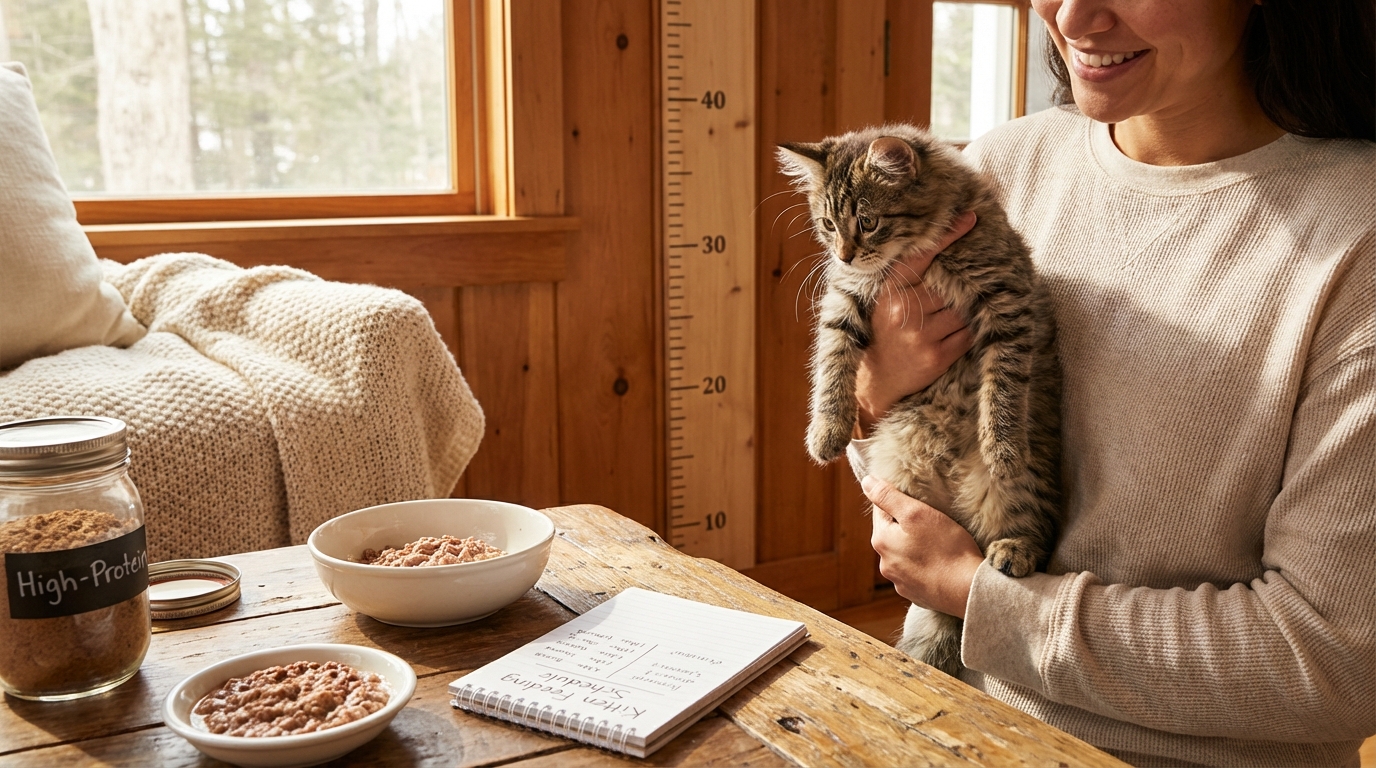
The secret to a smooth transition is what many breeders call the "Slurry." Think of it as a bridge between the liquid world and the solid one. You take a high-quality kitten wet food and blend it with warm water or a kitten milk replacer until it is a soupy, shallow mess. It looks unappealing to us, but to a kitten, it is the ultimate training wheels for eating.
But here is the catch. Kittens are obligate carnivores. This means their bodies are biologically hardwired to process animal protein, not plants. When you are looking for that first food, quality is everything. For example, some fresh options like Smalls Ground Bird contain over 48% protein when measured as dry matter. That is the kind of fuel a growing predator needs to build muscle and a strong heart.
Key insights for the transition:
- Weaning is a marathon, not a sprint. Start at three weeks but do not expect total independence until week eight.
- Protein is the priority because their bodies are building tissue at a record pace. Look for animal-based proteins rather than grain-heavy fillers.
- The "Slurry" should be served in a very shallow dish. Kittens often walk through their food before they eat it, so be prepared for some cleanup.
Texture and Technique: Helping Their Jaws Develop
As those tiny, needle-like teeth start poking through the gums, food texture becomes about more than just calories. It becomes a tool for physical development. You will notice your kitten starting to gnaw on things. This is the perfect time to slowly reduce the amount of liquid in their slurry.
Moving from a soupy mix to a chunkier wet food helps with tooth eruption and builds jaw strength. It is a bit like a workout for their face. While it is tempting to leave food out all day, remember that wet food spoils fast. A good rule of thumb is to pick up and toss any uneaten canned food after about 30 minutes. This keeps their environment clean and prevents them from eating something that could upset their sensitive developing tummies.
Also, think about how they eat. In the wild, a cat has to work for its meal. You can start introducing very simple puzzle feeders even at this age. It turns mealtime into a game of "hunting," which is great for their brain development. Just keep the treats to a minimum. Anything extra should account for less than 10 percent of their daily calories so they do not get picky or gain too much weight too fast.
Now that the weaning process is underway, you will start to see their personality explode alongside their physical growth. It is a wild ride, but getting the food right makes all the difference.
Texture and Technique: Helping Their Jaws Develop
Ever watched a kitten try to tackle solid food for the first time? It’s a clumsy, adorable disaster. But that messy struggle is actually a vital physical workout. Around three to four weeks of age, kittens begin the transition from mom’s milk to solids, and they don't just jump straight to kibble. You start with a "slurry"—a soupy, warm mixture of kitten food and milk replacer. It’s essentially the training wheels of the feline culinary world.
This transition isn't just about filling their bellies. It’s about the "gym" for their face. Because kittens grow 10–12 times their birth weight in just six short months, their skeletal structure is under massive pressure to keep up. As you gradually move from that soupy mix to chunkier wet food, the texture provides the resistance needed for jaw development. Think of it as a natural teething process. That slight resistance helps those tiny, needle-sharp teeth erupt through the gums and teaches them the coordination they’ll need as obligate carnivores.
The nutritional stakes are incredibly high during this phase. Kittens require nearly three times the protein of an adult cat to support this explosive growth. Using a high-quality option like Smalls Ground Bird, which packs over 48% protein, ensures they have the building blocks for muscle while they practice their chewing. Just remember the "30-minute rule." If they haven't finished that chunky feast within half an hour, toss it. Bacteria loves wet food as much as kittens do, and a clean bowl is the first step toward a healthy habit.
Key insights:
- Texture is a developmental tool. Moving from liquids to chunks isn't just a preference; it’s a physical requirement for strengthening jaw muscles and aiding tooth eruption.
- Protein density is non-negotiable. Since kittens are obligate carnivores with tiny stomachs, every bite must be packed with animal-sourced protein to fuel their 12x weight gain.
- The weaning window is short but critical. Starting at three weeks and finishing by eight weeks sets the entire biological foundation for their adult life.
Now, while the texture gets them chewing, the actual clock on the wall dictates how they'll grow. Let's look at how to turn these nutritional needs into a reliable daily routine.
Fueling an Obligate Carnivore: Why Protein is Non-Negotiable
Imagine a human baby growing to the size of a pre-teen in just six months. That sounds like a sci-fi plot, but for a kitten, that is just a normal Tuesday. In those first twenty-four weeks of life, these tiny creatures can explode to 10 or 12 times their birth weight. Because of this metabolic sprint, they need two to three times more protein per pound than a lazy adult cat lounging on your sofa. They are not just small cats. They are biological high-performance athletes in a constant state of physical construction.
Kittens are obligate carnivores
The Taurine and DHA Factor
Think about the sheer speed of development happening under that soft fur. In about half a year, a kitten will grow 10 to 12 times its original birth weight. That is an incredible physical feat. To pull it off without health hitches, they need more than just calories. They need Taurine and DHA.
Taurine is the heavy lifter for the heart and eyes. Because kittens are obligate carnivores, they cannot manufacture this amino acid themselves like some other animals can. They have to eat it. If the food is low quality or lacks real animal protein, their vision and cardiac health are at risk. It is that simple.
Then we have DHA. Think of this as the brain's construction crew. This fatty acid is what helps a kitten become "trainable" and sharp. When you see a kitten finally figure
Fresh vs. Canned: The Rise of Human-Grade Nutrition
Imagine your kitten growing twelve times their birth weight in just six months. It sounds like science fiction. But for a tiny feline, this explosive growth is a daily reality that demands serious fuel. This is exactly why the old "kibble in a bowl" approach is losing ground to fresh, human-grade alternatives. We are finally realizing that kittens are not just smaller versions of adult cats. They are high-performance athletes in the middle of a massive construction project.
The shift toward fresh food models like Smalls is about more than just fancy packaging. Consider the math. A kitten needs two to three times more protein per pound than an adult. When you look at Smalls Ground Bird, you are seeing over 48% protein on a dry matter basis. That is a staggering number. It provides the building blocks for muscles and organs without the heavy fillers found in traditional processing.
But here is the catch. Fresh food requires a different mindset from the owner. You cannot just leave a bowl of fresh turkey out all day while you run errands. If it sits for more than thirty minutes, it has to go in the trash to prevent bacteria growth. It is a commitment to quality over convenience.
What about hydration? This is where fresh and high-quality canned foods really shine. Cats are notorious for having a low thirst drive because their ancestors evolved to get moisture from their prey. A high-moisture diet protects their kidneys and keeps their urinary tract clear from the very start. Think of it as a long-term insurance policy for their health.
Key insights:
- Bioavailability is king. Fresh, human-grade proteins are easier for a kitten's short digestive tract to process compared to plant-based substitutes.
- Hydration is a silent health pillar. Starting a kitten on high-moisture food prevents the chronic dehydration often seen in cats raised solely on dry kibble.
- The thirty-minute rule is non-negotiable. Fresh food is real food, which means it spoils quickly. You have to be present and active during their feeding window.
Now that we understand the power of high-quality ingredients, we need to talk about the clock. Because even the best food in the world won't help if your timing is off.
Mastering the Kitten Feeding Schedule
Imagine a human baby growing ten times its size in just half a year. It sounds like science fiction, but that is exactly what is happening on your living room floor. In the first six months of life, a kitten can grow 10 to 12 times its birth weight. This isn't just growth. It is a biological marathon. Because of this, kittens are not just "small cats" who need smaller portions. They are high-performance engines that require two to three times more protein per kilogram of body weight than an adult cat.
Think of it this way. Their stomachs are roughly the size of a walnut, yet their energy needs are through the roof. You cannot simply fill a bowl once a day and walk away. They need fuel, and they need it often.
Between eight and twelve weeks old, your kitten should ideally eat four times a day. As they hit the four-month mark, you can usually scale back to three meals. By the time they reach six months, two or three larger meals often do the trick. But here is the catch. If you are feeding wet food to ensure they get that essential animal protein, you have to watch the clock. Bacteria love kitten food just as much as kittens do. You should pick up and discard any uneaten wet food after about 30 minutes. It might feel wasteful, but a stomach upset can set a growing kitten back significantly.
Key insights:
- Frequency beats volume. Because their stomachs are tiny, four small meals are much easier to digest than two large ones.
- Protein is non-negotiable. As obligate carnivores, kittens need animal-based protein to build muscle and organs. Plant-based fillers simply won't cut it.
- The 30-minute safety window. Leaving wet food out longer than half an hour invites spoilage and can lead to avoidable vet visits.
The Hidden Danger of Over-Treating
It is incredibly hard to say no to a meowing kitten. We often use treats as a way to show love, but this can backfire quickly. The reality is that treats should never make up more than 10 percent of a kitten’s daily calories. If you go over that limit, you risk unbalancing their diet. Kitten food is precisely formulated with specific ratios of calcium and phosphorus for bone growth. When you fill them up on treats, they eat less of the "real" food they actually need.
Try to change your mindset about what a treat is for. Instead of giving them a snack just because they look cute, use those calories for behavioral training. Use a tiny piece of high-protein freeze-dried meat to reward them for coming when called or for getting used to a carrier. This turns "empty calories" into a tool for a better-behaved cat. It is about building a bond through interaction rather than just through food.
The Hidden Danger of Over-Treating
It is a trap we all fall into. When those tiny, saucer-sized eyes look up at you while you are making a sandwich, it feels almost criminal not to share a little piece of turkey or a crunchy store-bought snack. We use food to say "I love you," but for a growing kitten, that extra love can actually backfire.
The reality is that your kitten is currently in a high-speed biological race. In just the first six months of life, a kitten can grow ten to twelve times its birth weight. That is a staggering amount of physical development happening in a very short window. Because they are obligate carnivores, their bodies are essentially machines designed to turn animal protein into muscle, bone, and organs. When you fill their small stomachs with treats, you are often displacing the high-protein fuel they actually need.
The golden rule here is to keep treats under 10 percent of their daily calories. It sounds strict, but there is a logical reason for it. Kittens require two to three times more protein per kilogram of body weight than adult cats do. If they fill up on "empty" calories from treats that lack essential nutrients like taurine or DHA, they might miss out on the building blocks for healthy heart and brain function. Think of it like a construction site where the workers are trying to build a skyscraper but someone keeps delivering boxes of decorative wallpaper instead of steel beams. The wallpaper looks nice, but it won't hold the building up.
So, how do we show affection without the health risks? Shift your mindset from "treating for love" to "treating for behavior." Use those calories to your advantage. Use small bits of high-quality food to reward your kitten for using the scratching post or for staying calm during a nail trim. You can even use puzzle feeders to simulate a "hunt," which provides mental stimulation and prevents them from bolting their food too quickly.
Key insights:
- Treats are supplementary, not foundational. Since kittens have such limited stomach capacity, every bite must count toward their massive growth spurts.
- Behavioral currency is better than free handouts. Using treats as a reward for specific actions builds a stronger bond and a better-adjusted adult cat than just giving them away.
- Quality over quantity always wins. If you do give treats, look for high-protein options that mimic their natural diet rather than carb-heavy biscuits.
The goal isn't to be a "no-fun" pet parent. It is about making sure that when your kitten reaches that six-month milestone, they have the physical foundation to live a long, healthy life. Once you have the calorie balance under control, you can start looking at the specific schedule of when those meals should actually happen.
Beyond the Bowl: Using Mealtime for Mental Health
Why do we treat mealtime like a chore? Most of us just plop a bowl on the floor and walk away. But for a creature that is biologically wired to stalk, pounce, and "kill" its dinner, that silver bowl is basically a boring participation trophy. Your kitten is a tiny, high-energy predator. If you don't give them a way to use those instincts, they will find their own "prey," which usually ends up being your expensive curtains or your bare ankles at three in the morning.
The reality is that kittens are not just "small cats." In their first six months, they grow ten to twelve times their birth weight. That is an explosive amount of physical and mental development. Because they are obligate carnivores, they need high-protein kitten food to fuel this growth. But they also need a job. This is where enrichment-based feeding changes everything. By using puzzle feeders or hiding small portions of food around the house, you simulate a natural hunt. It turns a thirty-second gulping session into a fifteen-minute brain workout.
Think of it this way: a bored kitten is a destructive kitten. When you use a puzzle feeder, your cat has to use their paws and brain to solve a problem. This releases dopamine and creates a sense
Common Kitten Nutrition Questions
We have all seen the classic cartoon image of a tiny kitten happily lapping up a saucer of milk. It looks sweet, but in the real world, that saucer is often a recipe for a very upset stomach. Most kittens actually lose the ability to digest lactose once they stop nursing. So, if you want to avoid a messy litter box situation, stick to fresh water and high-quality food.
The growth happening under all that fluff is actually staggering. In just their first six months, a kitten can grow ten to twelve times its original birth weight. To fuel that kind of biological explosion, they need two to three times more protein per pound than an adult cat. They aren't just "small cats" yet. They are high-performance growth machines that require specific fuel to build muscle, bone, and brain tissue.
The transition from nursing to solid food, known as weaning, is a delicate window. It usually starts around three or four weeks of age. You can't just drop a bowl of hard kibble in front of them and expect success. Most experts recommend starting with a "slurry" of kitten wet food mixed with warm water or a specialized milk replacer. By the time they hit eight weeks, they should be fully transitioned to solid meals.
But what about the "grain-free" debate? You will hear a lot of noise about this online. The reality is that kittens are obligate carnivores. This means their bodies are biologically designed to process animal protein, not plants. While a few grains might not be "poison," they shouldn't be the main event. Look for foods like Smalls Ground Bird, which packs over 48% protein on a dry matter basis. That is the kind of density a growing predator needs.
One thing new owners often miss is the "thirty-minute rule" for wet food. If your kitten wanders away from their bowl, don't leave that canned food sitting out all day. Bacteria can move in fast. If it hasn't been eaten in half an hour, toss it. It might feel wasteful, but it's much cheaper than a trip to
Building a Lifetime of Health
Think about the sheer scale of what is happening right now. In just six short months, your tiny ball of fur will grow ten to twelve times its original birth weight. If a human baby grew at that rate, they would weigh as much as a hippo by their first birthday. This is a physiological sprint that requires an incredible amount of high-quality fuel.
Because kittens are obligate carnivores, they aren't just "small cats" with smaller appetites. Their bodies are hardwired to process animal protein rather than plants. In fact, they need two to three times more protein per pound than an adult cat does. When you choose a high-protein option like Smalls Ground Bird, which sits at over 48 percent protein, you aren't just buying dinner. You are building the literal infrastructure of their future health.
But here is the reality that many owners miss. Nutrition is not just about physical growth. It's about behavior too. Using mealtime for enrichment, like hiding food in puzzle feeders to simulate a "hunt," keeps their minds sharp and prevents boredom-induced trouble later. This is the long game. When you prioritize DHA for their brain and the right calcium-to-phosphorus ratio for their skeleton today, you are essentially pre-paying for a healthier, more active senior cat a decade from now. It is the best investment you will ever make.
Key insights:
- The "Hippo" Growth Phase: Growth is so rapid that even a few days of poor nutrition can cause permanent developmental lags in bone density or vision.
- Protein as a Foundation: High-quality animal protein is non-negotiable because kittens lack the enzymes to get proper nutrition from heavy grain fillers.
- Brain and Body Connection: Nutrition and mental stimulation work together. A well-fed kitten with a "hunting" outlet is significantly less likely to develop destructive behavioral habits as an adult.
The journey might feel overwhelming at times, but remember that every bowl of food is a building block.
Frequently Asked Questions
How often should I weigh my kitten to ensure they are growing correctly?
You should aim to weigh your kitten once a week. It sounds frequent, but kittens grow at a staggering rate in those first six months, sometimes increasing their birth weight by ten or twelve times. If the scale stays still for more than a few days, it is often the first red flag that something might be wrong with their health or nutrition. A simple digital kitchen scale usually does the trick for this.
Can I feed my kitten adult cat food if I add supplements?
It is really best to avoid this. Here is the thing: a kitten is not just a "small cat" in the same way a toddler is not just a tiny adult. Their nutritional needs are much higher and very time-sensitive. Kittens actually require two to three times more protein per pound than an adult cat does. Even if you add supplements, you will likely miss the precise balance of calcium and phosphorus needed for their bones to grow properly. Stick to a dedicated kitten formula to be safe.
What is the best wet food for kittens with sensitive stomachs?
Look for a high-protein option with very few fillers or mystery ingredients. Many kitten owners are now switching to fresh, human-grade brands like Smalls because their ground bird recipes contain over 48% protein and avoid the heavy processing that can upset a tiny belly. If your kitten has a "glass stomach," you want to avoid foods packed with grains or plant proteins. Kittens are obligate carn
Conclusion
So where does all this leave you and your new tiny roommate?
Those first six months are a total whirlwind. One day they fit in your palm and the next
About the author
Dr. Emily Hart
Veterinarian, DVM
Small animal veterinarian with 12 years of clinical experience specializing in feline health and preventive care.
Comments(3)
Emma Wilson
2 days agoThis article perfectly captures the essence of the Amalfi Coast. I visited last summer and these hidden coves were absolutely magical!

John Martinez
1 day agoGreat tips! Do you have any recommendations for budget-friendly accommodations in the area?

Sarah Chen
12 hours agoThe food recommendations were spot on. That family-run restaurant in Praiano is incredible!